
Pick My Brewer is reader-supported. When you buy through links on this page, we may earn a commission at no extra cost to you.
Here is the short version: espresso is coffee. It comes from the same beans as the coffee in your drip machine. What makes it espresso is how it is brewed, and that one difference changes almost everything about the cup, from its strength and texture to the equipment you need to make it at home.
The quick comparison
| Espresso | Drip coffee | |
|---|---|---|
| How it brews | Hot water is forced through finely ground, tightly packed coffee under about 9 bars of pressure | Hot water drips through medium-ground coffee by gravity |
| Grind | Fine, close to table salt | Medium, like coarse sand |
| Brew time | About 25 to 30 seconds | About 4 to 6 minutes |
| Coffee to water | About 1:2 by weight | About 1:15 to 1:17 by weight |
| Serving size | 1 to 2 oz shot | 8 to 12 oz cup |
| Texture | Thick and syrupy, topped with crema | Lighter and cleaner |
| Caffeine per serving | About 63 mg per 1 oz shot | About 95 mg per 8 oz cup |
How espresso is made
An espresso machine pushes hot water, usually around 195°F to 205°F, through a compact puck of finely ground coffee at roughly 9 bars of pressure, which is about nine times the air pressure at sea level. That pressure lets the water pull a lot of flavor and dissolved coffee out of the grounds in under half a minute. A typical double shot uses about 18 grams of coffee to make about 36 grams of liquid.
Because everything happens so fast and under pressure, small changes matter. A grind that is slightly too coarse runs fast and tastes sour; slightly too fine and the shot chokes and turns bitter. That sensitivity is why espresso has a reputation for a learning curve.
What is crema?
Crema is the golden-brown foam on top of a fresh shot. It forms when pressure forces carbon dioxide from freshly roasted coffee into tiny bubbles along with the coffee’s oils. Good crema is a sign of fresh beans and a well-pulled shot, but more crema does not automatically mean better flavor.
How regular coffee is made
Drip, pour-over, and French press all brew by letting coarser grounds sit in or pass through hot water for several minutes, with no added pressure. The longer contact time and much higher water ratio produce a larger, lighter-bodied cup where you can often taste more of the bean’s subtle flavors. It is also far more forgiving: a slightly off grind or ratio still makes a perfectly drinkable cup.
Is espresso made from different beans?
No. Any coffee bean can be brewed as espresso. Bags labeled “espresso roast” or “espresso blend” are simply roasted and blended with espresso in mind, often a little darker to taste balanced and less acidic in such a concentrated form. Many specialty roasters now pull lighter, fruitier espresso too. Likewise, you can brew an espresso roast in a drip machine and it will taste fine.
Which has more caffeine?
It depends on whether you compare by the ounce or by the serving. According to USDA nutrition data, a 1 oz shot of espresso has about 63 mg of caffeine, while an 8 oz cup of brewed coffee has about 95 mg.
- Ounce for ounce, espresso is far stronger, around six times as concentrated.
- Cup for cup, a regular mug of drip coffee usually has more caffeine than a single shot, and about the same as a double.
So a latte made with one shot typically has less caffeine than a mug of drip coffee, even though it tastes stronger.
How they taste
Espresso is intense, rich, and heavy on the tongue, with concentrated sweetness, bitterness, and acidity all at once. Drip coffee is milder and more open, which makes it easier to sip slowly and to pick out a bean’s lighter flavor notes. Espresso also stands up to milk in a way drip coffee cannot, which is why it is the base for lattes and cappuccinos.
Popular espresso drinks
- Americano: espresso topped up with hot water. Similar in size to drip coffee, but with a different, slightly bolder character.
- Latte: espresso with a lot of steamed milk and a thin layer of foam.
- Cappuccino: espresso with less milk and a thicker layer of foam.
- Macchiato: a shot of espresso marked with a small spoonful of milk foam.
Making each at home
Regular coffee is easy and inexpensive. A good drip coffee maker, a pour-over setup, or a French press will make excellent coffee with very little practice.
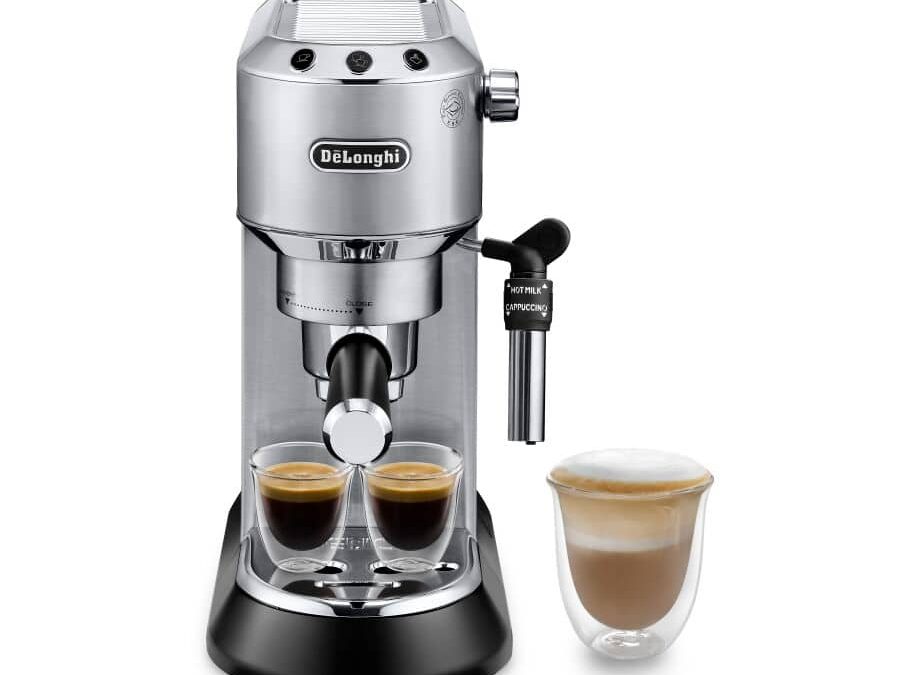
Espresso takes more equipment. You need a machine that can produce real pressure and a grinder that can grind fine and consistently. A semi-automatic machine like the De’Longhi Dedica Deluxe or the Breville Barista Express (which has a grinder built in) puts you in control of each shot, while a fully automatic machine like the De’Longhi Magnifica Evo grinds, brews, and froths milk at the touch of a button. If you are choosing between the two most popular brands, our Breville vs De’Longhi guide breaks down the differences. Browse every pick in our espresso machine guide.
Can you make espresso without a machine?
Not true espresso, since that requires about 9 bars of pressure. A stovetop moka pot or an AeroPress can make strong, concentrated coffee that works well in milk drinks, but it will be thinner and will not have real crema. Pod machines like Nespresso make an espresso-style shot with very little effort, at the cost of being limited to pods.
Which should you choose?
- Choose regular coffee if you drink big mugs throughout the morning, want a simple routine, or like tasting the lighter flavors of different beans.
- Choose espresso if you love lattes and cappuccinos, prefer a small, intense drink, or enjoy the hobby of dialing in shots.
- Want both? Many households keep a drip maker for everyday mugs and an espresso machine for weekend milk drinks.
Check Price on Amazon: De’Longhi Dedica Deluxe
Check Price on Amazon: Breville Barista Express
Check Price on Amazon: De’Longhi Magnifica Evo