
Pick My Brewer is reader-supported. When you buy through links on this page, we may earn a commission at no extra cost to you.
A French press makes rich, full-bodied coffee with nothing more than coarse grounds, hot water, and a few minutes of patience. There is no paper filter, no machine, and no electricity required. It is one of the cheapest ways to make genuinely good coffee at home, and one of the easiest to get right once you know the few details that matter.
What is a French press?
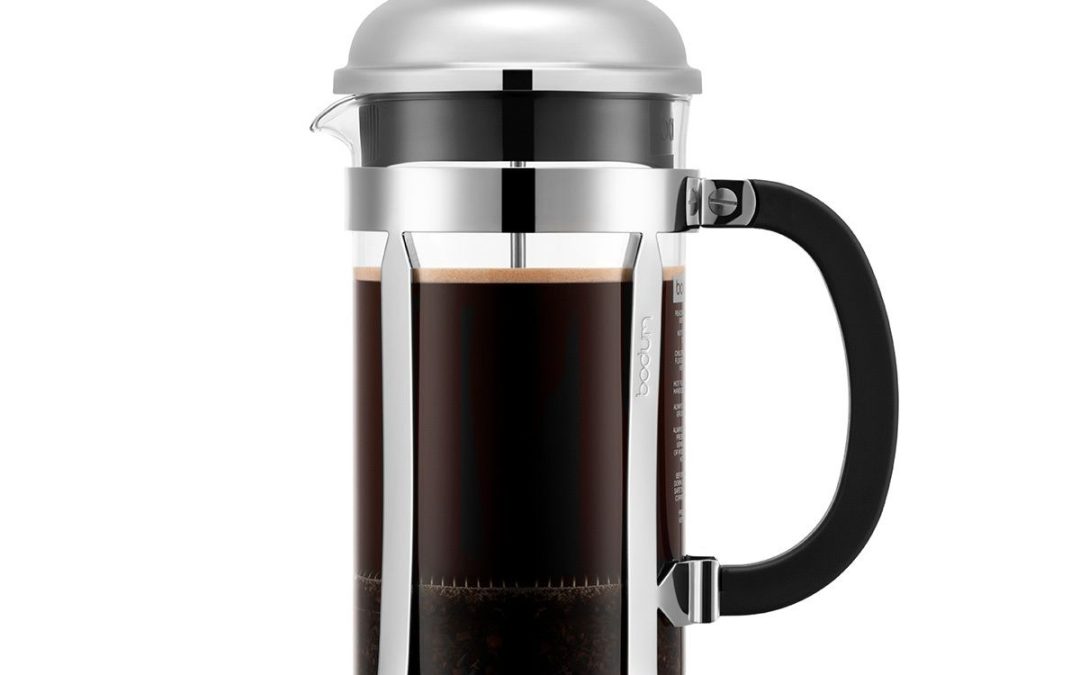
A French press (also called a cafetière, press pot, or plunger pot) is a carafe, usually glass or stainless steel, with a lid and a plunger attached to a fine metal mesh filter. You steep coffee grounds directly in hot water, then push the plunger down to trap the grounds at the bottom so you can pour the coffee off the top.
Despite the name, the plunger design most people use today traces back to patents filed by Italian designers in the late 1920s. It became popular in France, and the name stuck.
Why French press coffee tastes different
Because a metal mesh lets through the coffee’s natural oils and some very fine particles that a paper filter would catch, French press coffee has a heavier, fuller body than drip coffee. That is the appeal for most fans. The trade-off is a little sediment at the bottom of the cup.
What you need
- A French press. The Bodum Chambord 8-Cup is the classic, affordable glass design. If you want coffee that stays hot and won’t break, look at an insulated stainless steel press: the Frieling 36 oz is built entirely of steel and fully dishwasher safe, the Fellow Clara adds ratio lines and an easy-clean non-stick interior, and the ESPRO P7 uses a dual micro-filter for the cleanest, least gritty cup.
- Whole bean coffee and a burr grinder. Freshly ground beans make the biggest difference in flavor. A burr grinder like the Baratza Encore ESP gives the even, coarse grind a French press needs.
- Hot water. A kettle works fine. A thermometer or temperature-control kettle is nice but optional.
- A kitchen scale (optional). Weighing your coffee and water is the easiest way to get the same great cup every time.
The right ratio
A good starting point is 1 part coffee to 15 or 16 parts water by weight. Use less water for a stronger cup and more for a lighter one.
| Water | Coffee (by weight) | Coffee (by volume, approx.) |
|---|---|---|
| 12 oz (350 ml), 1 mug | 22 g | 3 to 4 tablespoons |
| 17 oz (500 ml), 2 mugs | 31 g | 5 to 6 tablespoons |
| 34 oz (1 liter), full 8-cup press | 62 g | about 3/4 cup |
Volume measurements are rough because bean size and roast change how much coffee fits in a spoon. If you can, use a scale.
How to make coffee with a French press, step by step
- Heat your water. Aim for about 195°F to 205°F (90°C to 96°C). Without a thermometer, bring water to a boil and let it rest for about 30 seconds.
- Preheat the press. Swirl a little hot water in the empty press and your mug, then pour it out. This keeps the brew from cooling too fast.
- Grind your coffee coarse. The grounds should look like coarse sea salt or breadcrumbs. Too fine and the coffee turns bitter and muddy, and the plunger gets hard to push.
- Add the grounds and pour. Put the coffee in the press, start a timer, and pour in all the water, making sure every ground gets wet.
- Stir gently. After about 30 seconds, give it a quick stir to break up any dry clumps floating on top.
- Steep for 4 minutes. Place the lid on with the plunger pulled all the way up and let it sit.
- Press slowly. Push the plunger down with steady, gentle pressure. If it resists hard, your grind is too fine. Do not force it.
- Pour right away. Serve all the coffee immediately or move it to a thermal carafe. Coffee left sitting on the grounds keeps extracting and turns bitter.
Want a cleaner cup? Try the slow method
If sediment bothers you, a popular variation (spread widely by coffee educator James Hoffmann) trades time for clarity. After the 4-minute steep, stir the crust on top so the grounds sink, skim off the foam with two spoons, and then wait another 5 to 8 minutes. Most of the fine particles settle to the bottom. Then press the plunger only to the surface of the coffee, just enough to act as a strainer, and pour slowly. Leave the last bit in the press, since that is where the remaining silt collects.
Troubleshooting your French press coffee
| Problem | Likely cause | Fix |
|---|---|---|
| Bitter or harsh | Grind too fine, steeped too long, or coffee left on the grounds | Grind coarser, steep 4 minutes, pour off right after pressing |
| Weak or sour | Not enough coffee, water too cool, or grind too coarse | Use more coffee, hotter water, or a slightly finer grind |
| Lots of sludge | Uneven or too-fine grind, or pouring the last of the pot | Use a burr grinder, try the slow method, leave the last ounce behind |
| Plunger is hard to push | Grind too fine | Grind coarser and press gently |
| Grounds slip past the filter | Bent or worn mesh filter | Check that the filter sits flat against the glass, or replace it |
How to clean a French press
Do not pour the used grounds down the sink, since they can clog drains. Scoop or shake them into the trash or compost, then rinse the carafe. Every week or so, unscrew the plunger and wash the filter screens separately. Coffee oils build up between the layers and can make your coffee taste stale. Check your press’s instructions before using the dishwasher, especially for glass carafes.
Is a French press right for you?
A French press is a great fit if you like bold, full-bodied coffee, want an inexpensive brewer with nothing to break or replace, or brew for one or two people. If you prefer a cleaner, lighter cup, look at our pour-over brewers, or the AeroPress, which uses a paper filter and pressure for a cup with less sediment. Browse all our French press picks to compare.
Check Price on Amazon: Bodum Chambord 8-Cup French Press
Check Price on Amazon: Frieling 36 oz French Press
Check Price on Amazon: Fellow Clara French Press
Check Price on Amazon: ESPRO P7 French Press
Check Price on Amazon: Baratza Encore ESP